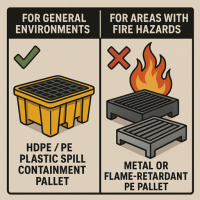
Can Spill Pallets Be Fire-Resistant? Steel vs. Polyethylene Pallet Analysis
| Guidance Parameter | Regulatory Criteria & Engineering Solution | Compliance Standard |
|---|---|---|
| Engineering Topic | Material Fire Resistance: Heavy Galvanized Steel vs. Polyethylene | SOBLAR Advisory #116 |
| Temperature Limits | HDPE softening: ~80°C; Galvanized Steel stability: >800°C | Determines containment retention under fire load |
| Fire Codes | NFPA 30 (Flammable and Combustible Liquids Code) | OSHA 1910.106 Flammable Liquids storage compliance |
| Recommended Use | Steel: Solvents, fuels, thinners | HDPE: Acids, alkalis, oils | Dual-containment strategies for mixed hazard plants |
【Product Overview & Engineering Highlights】
Can Spill Pallets Be Fire-Resistant? Steel vs. Polyethylene Pallet Analysis - SOBLAR
In-depth engineering analysis comparing galvanized steel vs. high-density polyethylene (HDPE) secondary containment spill pallets. Understand fire load limits, chemical compatibility, and compliance under NFPA 30 and OSHA flammable storage standards.
【Key Technical Specifications & Compliance Advantages】
- Engineering Topic: Material Fire Resistance: Heavy Galvanized Steel vs. Polyethylene (SOBLAR Advisory #116)
- Temperature Limits: HDPE softening: ~80°C; Galvanized Steel stability: >800°C (Determines containment retention under fire load)
- Fire Codes: NFPA 30 (Flammable and Combustible Liquids Code) (OSHA 1910.106 Flammable Liquids storage compliance)
- Recommended Use: Steel: Solvents, fuels, thinners | HDPE: Acids, alkalis, oils (Dual-containment strategies for mixed hazard plants)
Engineered for demanding industrial facilities, semiconductor plants, chemical processing zones, and automated manufacturing lines, this solution helps EHS managers maintain strict regulatory compliance, prevent workplace incidents, and streamline routine safety audits.

Need Professional Plant EHS Audit or Technical Consultation?
SOBLAR's senior industrial safety engineers provide on-site plant risk assessments, chemical containment planning, and custom HAZWOPER training across Taiwan. Please contact our advisory team via our Inquiry Board or directly:
Tel: +886-4-2281-6078 | Email: service@soblar.com