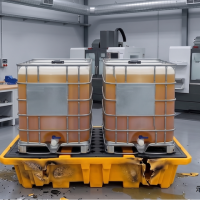
Preventing Polymer Cracking: PE vs. PP Chemical Compatibility Guide for Spill Pallets
| Guidance Parameter | Regulatory Criteria & Engineering Solution | Compliance Standard |
|---|---|---|
| Engineering Reference | Chemical Compatibility & Environmental Stress Cracking (ESC) Matrix | SOBLAR Polymer Compatibility Reference Guide |
| Polymer Profiles | Rotomolded Virgin HDPE (High Toughness) vs. Injection-Molded PP | Cross-referenced against New Pig empirical laboratory data |
| Failure Mechanism | Environmental Stress Cracking (ESC) from surfactant / solvent attacks | Accelerated under mechanical drum weight and elevated ambient temperature |
| Selection Protocol | Mineral Acids/Alkalis -> HDPE | Hydrocarbons -> Steel | Elevated Temp -> PP | Supports reliable long-term secondary containment compliance |
1. Polymer Failure Mechanics: Why Spill Pallets Crack Under Chemical Load
In industrial drum storage areas, selecting the wrong polymer for secondary containment can cause Environmental Stress Cracking (ESC), oxidative embrittlement, or solvent swelling. Even though High-Density Polyethylene (HDPE) and Polypropylene (PP) are both polyolefins, their molecular branching and crystallinity create distinct chemical and thermal limits when supporting heavy 55-gallon drums or 1,000L IBC totes.
2. Chemical Resistance Rating Definitions (Based on Laboratory Immersion Data)
| Rating | Classification | Observed Polymer Effect & Expected Service Window |
|---|---|---|
| E | Excellent | No measurable chemical attack or structural degradation; suitable for long-term containment. |
| G | Good | Minor surface discoloration or minimal absorption; expected service window of several months to years. |
| F | Fair | Moderate etching, dimensional swelling, or softening; suitable only for short-term transfer (weeks to months). |
| P | Poor | Significant loss of mechanical yield strength within days; not recommended for loaded drum storage. |
| N | Not Recommended | Severe swelling, softening, or rapid permeation within hours; use galvanized or stainless steel containment instead. |
3. Material Selection Breakdown: HDPE vs. PP Compatibility
- Compatible with Both HDPE and PP (Long-Term Storage): Strong inorganic alkalis (sodium hydroxide NaOH, potassium hydroxide KOH, aqueous ammonia), dilute to medium-concentration mineral acids (hydrochloric acid HCl, dilute sulfuric acid, phosphoric acid), glacial acetic acid at ambient temperature, acetone, and common alcohols (methanol, ethanol, isopropyl alcohol).
- Preferred for HDPE Only (Avoid Long-Term PP Exposure): Concentrated oxidizing acids at ambient temperature (98% sulfuric acid, 50%–70% nitric acid), 30%–90% hydrogen peroxide, and sodium hypochlorite (bleach). PP is susceptible to tertiary carbon chain scission and brittle cracking under strong oxidizers.
- Preferred for PP Only (Elevated Temperature Applications): Hot chemical waste liquids (60°C–100°C). HDPE softens significantly above 60°C under drum loads, whereas polypropylene containment trays maintain higher thermal rigidity.
- Incompatible with Both Polymers (Use Steel Containment): Aromatic hydrocarbons (xylene, toluene, benzene) and chlorinated solvents (trichloroethylene TCE, perchloroethylene, methylene chloride). These low-polarity solvents rapidly permeate polyolefins and cause softening.
4. Quick Compatibility Reference Matrix (PE vs. PP)
| Chemical Substance / Class | PE (HDPE) | PP (Polypropylene) | Engineering Storage Recommendation |
|---|---|---|---|
| Sodium Hydroxide (NaOH) & Caustics | E (Excellent) | Excellent | Safe for long-term storage on both HDPE and PP pallets. |
| Hydrogen Peroxide (30%–90%) & Oxidizers | E (Excellent) | Fair / Poor | Specify virgin HDPE spill pallets; PP embrittles under oxidizers. |
| Concentrated Sulfuric Acid (98%, 20°C) | E (Excellent) | Fair | Use heavy-duty rotational-molded HDPE containment at ambient temperature. |
| Xylene, Toluene & Trichloroethylene (TCE) | F to N (Avoid) | Not Recommended | Avoid plastic pallets for long-term storage; use FM-approved steel containment or flammable safety cabinets. |
Need Professional Plant EHS Audit or Technical Consultation?
SOBLAR's senior industrial safety engineers provide on-site plant risk assessments, chemical containment planning, and custom HAZWOPER training across Taiwan. Please contact our advisory team via our Inquiry Board or directly:
Tel: +886-4-2281-6078 | Email: service@soblar.com