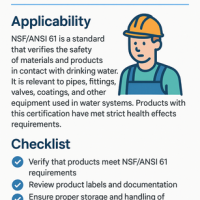
Understanding NSF/ANSI 61 Certification for Drinking Water Safety
| Guidance Parameter | Regulatory Criteria & Engineering Solution | Compliance Standard |
|---|---|---|
| Certification Standard | NSF/ANSI/CAN Standard 61 (Health Effects of Drinking Water Components) | SOBLAR Regulatory Brief #123 |
| Evaluation Rigor | Chemical extraction testing under cold and hot water pH exposure | Gas chromatography / mass spectrometry (GC/MS) toxicological review |
| Applicable Materials | PTY264 steel repair putty, water main seals, municipal valves | Mandatory for food processing, pharmaceutical, and potable lines |
| Legal Compliance | Required by US Safe Drinking Water Act (SDWA) & Taiwan EPA water norms | Protects public health and prevents severe contamination fines |
【Product Overview & Engineering Highlights】
Understanding NSF/ANSI 61 Certification for Drinking Water Safety - SOBLAR
Authoritative overview of NSF/ANSI/CAN 61: Drinking Water System Components – Health Effects. Understand why industrial repair compounds and sealants touching potable water systems must hold third-party certification to prevent toxic chemical leaching.
【Key Technical Specifications & Compliance Advantages】
- Certification Standard: NSF/ANSI/CAN Standard 61 (Health Effects of Drinking Water Components) (SOBLAR Regulatory Brief #123)
- Evaluation Rigor: Chemical extraction testing under cold and hot water pH exposure (Gas chromatography / mass spectrometry (GC/MS) toxicological review)
- Applicable Materials: PTY264 steel repair putty, water main seals, municipal valves (Mandatory for food processing, pharmaceutical, and potable lines)
- Legal Compliance: Required by US Safe Drinking Water Act (SDWA) & Taiwan EPA water norms (Protects public health and prevents severe contamination fines)
Engineered for demanding industrial facilities, semiconductor plants, chemical processing zones, and automated manufacturing lines, this solution helps EHS managers maintain strict regulatory compliance, prevent workplace incidents, and streamline routine safety audits.
Need Professional Plant EHS Audit or Technical Consultation?
SOBLAR's senior industrial safety engineers provide on-site plant risk assessments, chemical containment planning, and custom HAZWOPER training across Taiwan. Please contact our advisory team via our Inquiry Board or directly:
Tel: +886-4-2281-6078 | Email: service@soblar.com