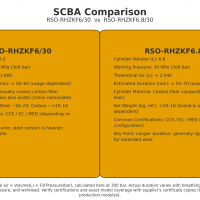
SCBA Comparison: Steel Cylinder (RHZK6/30) vs. Carbon Fiber (RHZKF6.8/30)
| Guidance Parameter | Regulatory Criteria & Engineering Solution | Compliance Standard |
|---|---|---|
| Apparatus Comparison | Steel Cylinder (RHZK6/30) vs. Carbon Fiber (RHZKF6.8/30) | SOBLAR Hazmat Respiratory #121 |
| Total Weight Profile | Steel setup: ~14.0 kg | Carbon Fiber setup: ~8.5 kg (-40% lighter) | Substantially improves responder agility and duration |
| Working Pressure | Both rated at 300 Bar (30 MPa); 6.0L vs. 6.8L air volume | Provides approx. 50-60 minutes working duration |
| Hydrostatic Testing | Steel: Test every 3 years (unlimited life) | Carbon: Test 3-5 yrs (15-yr life) | Complies with EN 137, ISO 23269, and local pressure codes |
【Product Overview & Engineering Highlights】
SCBA Comparison: Steel Cylinder (RHZK6/30) vs. Carbon Fiber (RHZKF6.8/30) - SOBLAR
Technical evaluation of Self-Contained Breathing Apparatus (SCBA) cylinder technologies. Compare weight, air capacity, ergonomic fatigue, service life, and maintenance cycles between traditional steel and modern carbon-fiber composite cylinders.
【Key Technical Specifications & Compliance Advantages】
- Apparatus Comparison: Steel Cylinder (RHZK6/30) vs. Carbon Fiber (RHZKF6.8/30) (SOBLAR Hazmat Respiratory #121)
- Total Weight Profile: Steel setup: ~14.0 kg | Carbon Fiber setup: ~8.5 kg (-40% lighter) (Substantially improves responder agility and duration)
- Working Pressure: Both rated at 300 Bar (30 MPa); 6.0L vs. 6.8L air volume (Provides approx. 50-60 minutes working duration)
- Hydrostatic Testing: Steel: Test every 3 years (unlimited life) | Carbon: Test 3-5 yrs (15-yr life) (Complies with EN 137, ISO 23269, and local pressure codes)
Engineered for demanding industrial facilities, semiconductor plants, chemical processing zones, and automated manufacturing lines, this solution helps EHS managers maintain strict regulatory compliance, prevent workplace incidents, and streamline routine safety audits.
Need Professional Plant EHS Audit or Technical Consultation?
SOBLAR's senior industrial safety engineers provide on-site plant risk assessments, chemical containment planning, and custom HAZWOPER training across Taiwan. Please contact our advisory team via our Inquiry Board or directly:
Tel: +886-4-2281-6078 | Email: service@soblar.com